– Work in progress –
BIOTA: Augmenting Natural History is an exhibition that explores the intersections of ecological conservation, natural history, and art. The term “Biota” derives from the Ancient Greek word for “life” (biotē) and signifies the flora and fauna of a given environment or period. Through mixed-media prints based on nineteenth and early twentieth-century scientific illustrations, the exhibition surveys a wide range of threatened and endangered species with presence in North Carolina, including the red wolf, the bog turtle, the Venus flytrap, and more. The illustrations are enhanced using augmented reality which activate these prints with dynamic digital visuals that represent contemporary ecological threats. By placing scientific illustrations under a digital lens, the exhibition encourages our community to augment the future of threatened and endangered species.
The exhibition will be presented at The Jerry and Bruce Chappell Family Gallery at Duke University from January through June 2027 and is co-curated by Noelle Y. Barr and Leandra-Juliet Kelley, Ph.D. Students in Duke University’s Department of Art, Art History & Visual Studies. It will be designed as a community-facing learning environment. The prints and animations will be supplemented by a vitrine for each featured species with archival materials such as original prints and manuscripts from the David M. Rubenstein Rare Book & Manuscript Library, endangered plant specimens from the Duke Herbarium, and contributions from local organizations such as the NC Museum of Natural Science, the Red Wolf Center and the Bonehenge Whale Center. An interactive touchscreen map will provide extended information about the featured species, other threatened North Carolina wildlife, conservation statistics, and organizations involved in their conservation. This feature is designed to deepen engagement and provide actionable pathways for visitors to support ecosystem preservation.
BIOTA has grown from sustained research at the intersection of art, science, and environmental stewardship. An early phase developed during a 2023 artist residency in Dunedin, New Zealand, where I studied endangered endemic species and community-based conservation efforts. Returning to North Carolina, I began examining how similar ecological pressures and collaborative responses shape our local ecosystems.
YELLOW-EYED PENGUIN
The yellow-eyed penguin, or hoiho in Māori, is one of the rarest penguin species in the world and is endemic to New Zealand. This shy and solitary bird prefers to nest away from its neighbors, primarily in coastal forests and scrub. While called the yellow-eyed penguin, it normally has gray eyes during its first year. Listed as endangered since 2000, the yellow-eyed penguin’s population has dramatically declined by 76% since 1996. Only 3,400 breeding pairs remain in the wild while facing threats like habitat loss, starvation, entanglements, climate change, invasive species, and fishing bycatch. Conservation efforts by organizations such as Yellow-eye Penguin Trust include safeguarding habitat protection, predator trapping, planting, providing nesting opportunities, and community advocacy.


The yellow-eyed penguin animation can already be viewed using the Artivive app by placing the phone over the illustration. As an alternative, for the purpose of this proposal, the animation can be viewed using the following link: https://vimeo.com/838877152/998cea9b1
NEW ZEALAND SEA LION
The New Zealand sea lion Phocarctos hookeri, known as whakahao or pakake in Maori, is an intelligent and playful species endemic to New Zealand, with a population of approximately 12,000, primarily breeding on the Auckland Islands. As the most threatened sea lion in the world, it was classified as endangered in 2015. It faces significant threats such as habitat degradation from industrial fishing, diseases, fisheries bycatch, and high pup mortality rates. Organizations such as the New Zealand Sea Lion Trust are actively working to support research, raise public awareness, and promote conservation efforts for the endangered sea lion.


NORTH CAROLINA (current focus)
The project features species native to or migrating through North Carolina, selected for their ecological importance and conservation status. These include the Venus flytrap; the critically endangered red wolf and North Atlantic right whale; the rusty patched bumblebee; the southern bog turtle; the Hickory Nut Gorge green salamander; the Cape Fear shiner; and the extinct Carolina parakeet. Together, these species create a regional narrative that reflects global patterns of biodiversity loss, resilience, and responsibility.
Each print composition integrates historic illustrations of a species with symbolic imagery related to specific threats and conservation strategies, as well as a stamp that indicates its current conservation status, bridging scientific research with visual storytelling. The Augmented Reality animations expand on these elements, translating data and ecological processes into accessible narratives that invite curiosity and empathy. By reanimating historical scientific imagery through contemporary technology, BIOTA demonstrates how knowledge from the past can inform present action and future care.
VENUS FLYTRAP
The Venus flytrap (Dionaea muscipula) is a carnivorous plant native to the wetlands of the Carolinas, described as “one of the most wonderful plants in the world” by Charles Darwin. It features unique trap leaves that snap shut when prey triggers its sensitive hairs. The plant lives in nutrient-poor, acidic soils, relying on its ability to consume insects for essential nutrients. The Venus flytrap is threatened by habitat loss due to development, poaching, and fire suppression that limits its sunlight access. While its population has increased to about 888,000 as of 2024, it is still considered vulnerable. Conservation efforts include habitat protection, public awareness campaigns, and legal penalties for poaching.
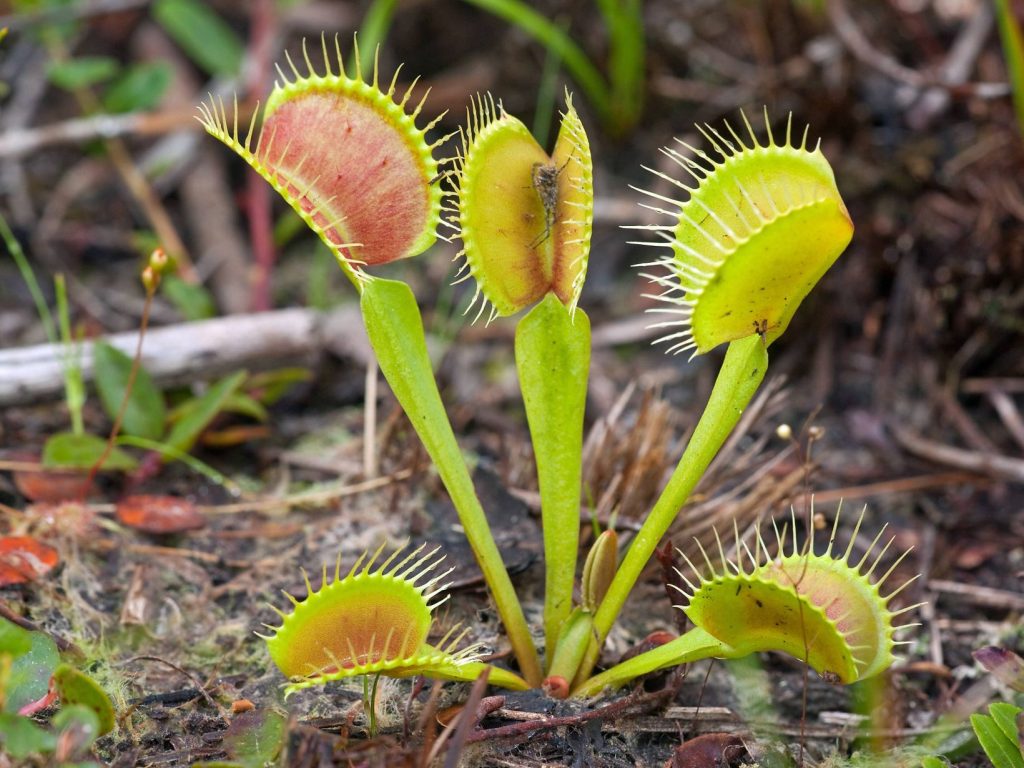

The Venus flytrap (Dionaea muscipula) is a carnivorous plant native to the wetlands of the Carolinas, described as “one of the most wonderful plants in the world” by Charles Darwin. It features unique trap leaves that snap shut when prey triggers its sensitive hairs. The plant lives in nutrient-poor, acidic soils, relying on its ability to consume insects for essential nutrients. The Venus flytrap is threatened by habitat loss due to development, poaching, and fire suppression that limits its sunlight access. While its population has increased to about 888,000 as of 2024, it is still considered vulnerable. Conservation efforts include habitat protection, public awareness campaigns, and legal penalties for poaching.
RED WOLF
The red wolf (Canis rufus) is a critically endangered canid found mainly in North Carolina. Recognizable by their reddish-brown fur, these shy, monogamous animals once roamed the southeastern United States. Due to habitat loss, illegal killings, and hybridization with coyotes, their numbers dwindled, leading to their reintroduction into the wild in 1987. Efforts to protect and conserve them continue, as they play a crucial role in maintaining ecological balance. They face threats from human activities, vehicle strikes, and misinformation, and their survival depends heavily on ongoing conservation efforts.


Illustrations in progress:
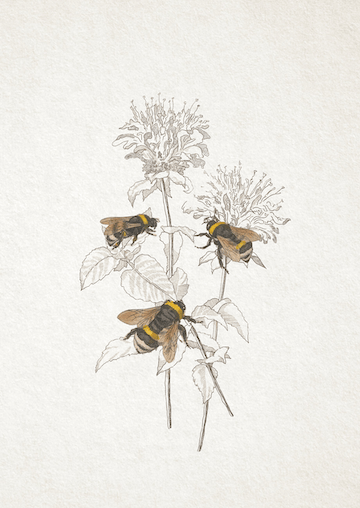


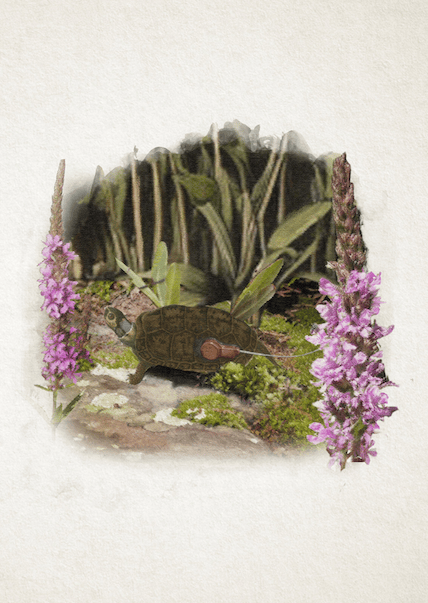
The following is a list of species that BIOTA is working on
- Plant: Venus Flytrap
- Terrestrial mammal: Red Wolf
- Marine mammal: North Atlantic Right Whale
- Insect: Saint Francis’s Satyr Butterfly, Rusty patched bumble bee or Monarch butterfly
- Bird: Carolina Parakeets (extinct)
- Reptile: bog turtle
- Amphibian: Hickory Nut Gorge green salamander
- Fish: Cape Fear Shiner
I am collaborating with other artists on some of the animations. Artists who are already committed to the project and with whom I am currently collaborating include Shirin Maleki, Esaú Dharma Vilchez, and Maddie Go.
By integrating art, science, and community partnerships, the exhibition positions ecological awareness as a shared practice, one that cultivates attention, empathy, and responsibility. In doing so, BIOTA demonstrates how creative, community-centered experiences can support both environmental sustainability and collective well-being.
This project is supported by a Research Seed Grant in Documentary Studies from the Center of Documentary Studies and the Office for Research & Innovation at Duke University.
